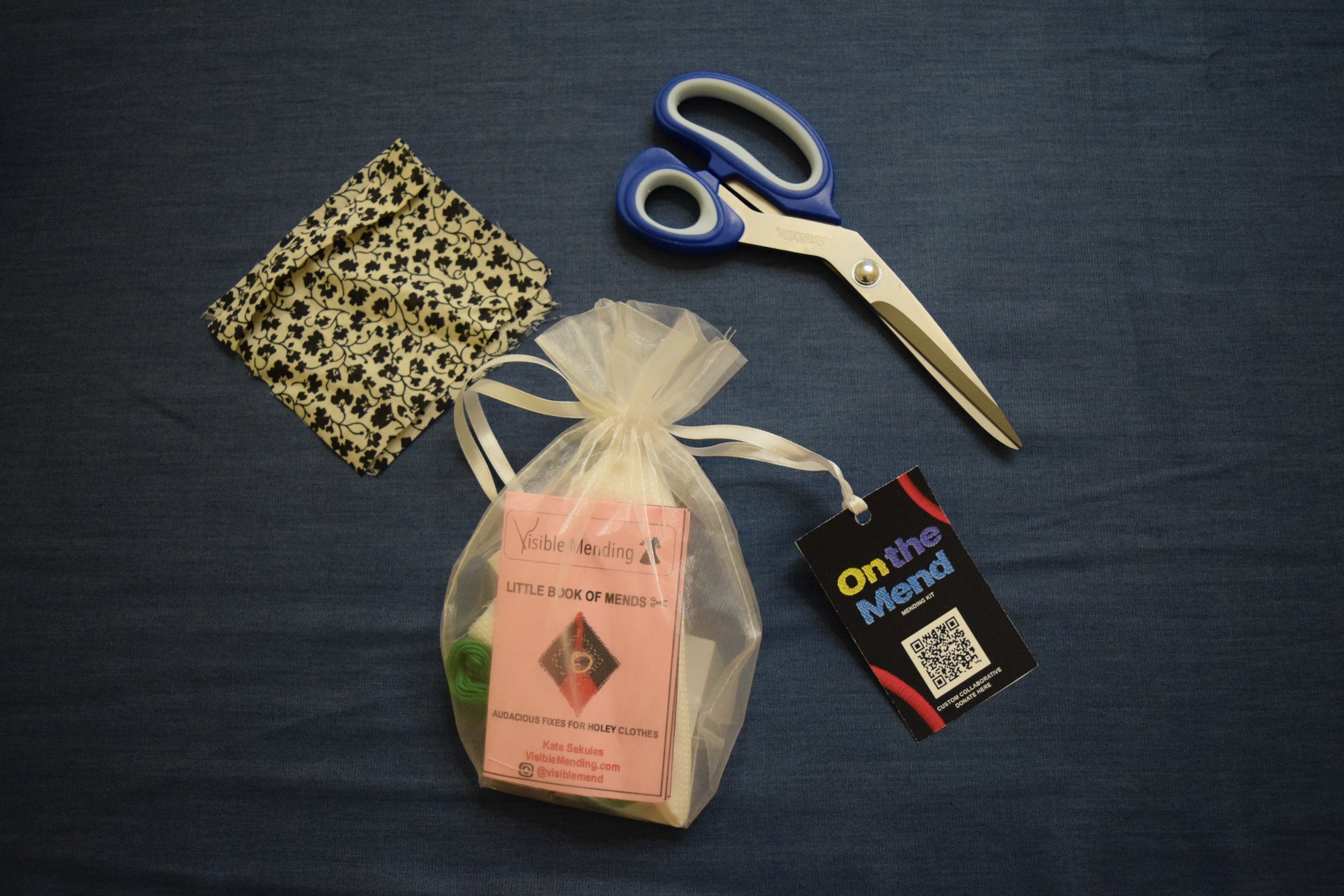
On the Mend: Why Using What You Have is the New Luxury!
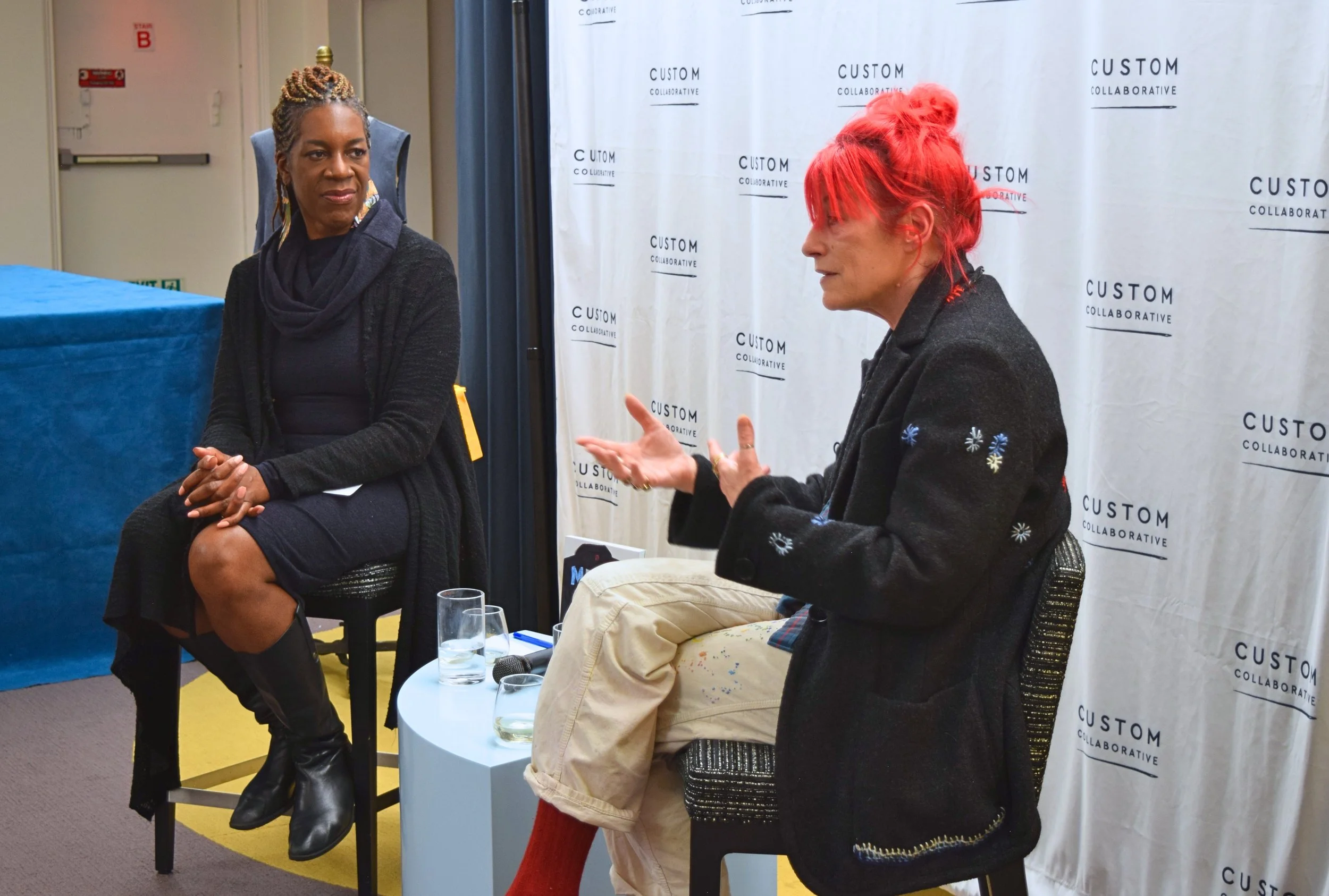
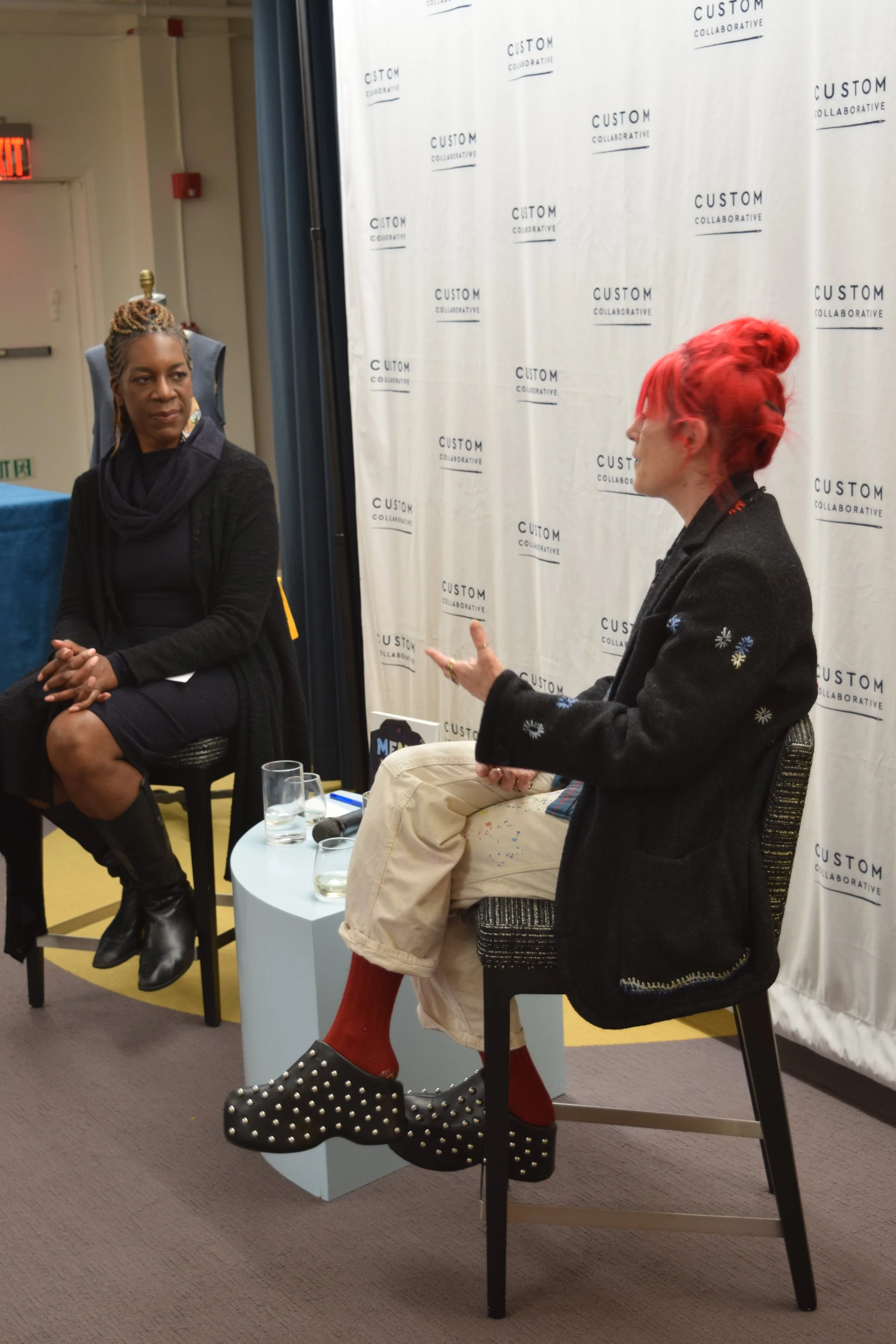
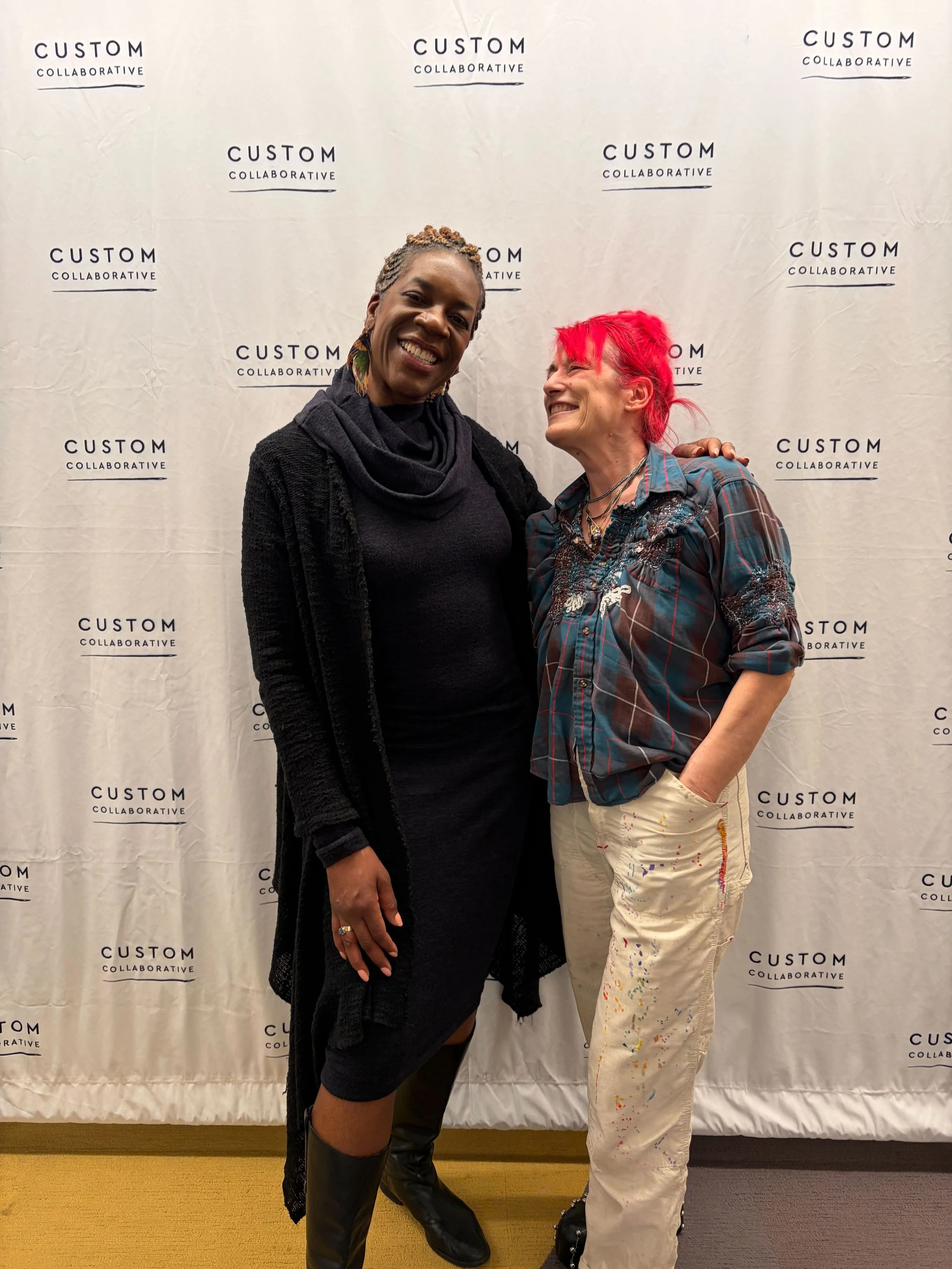
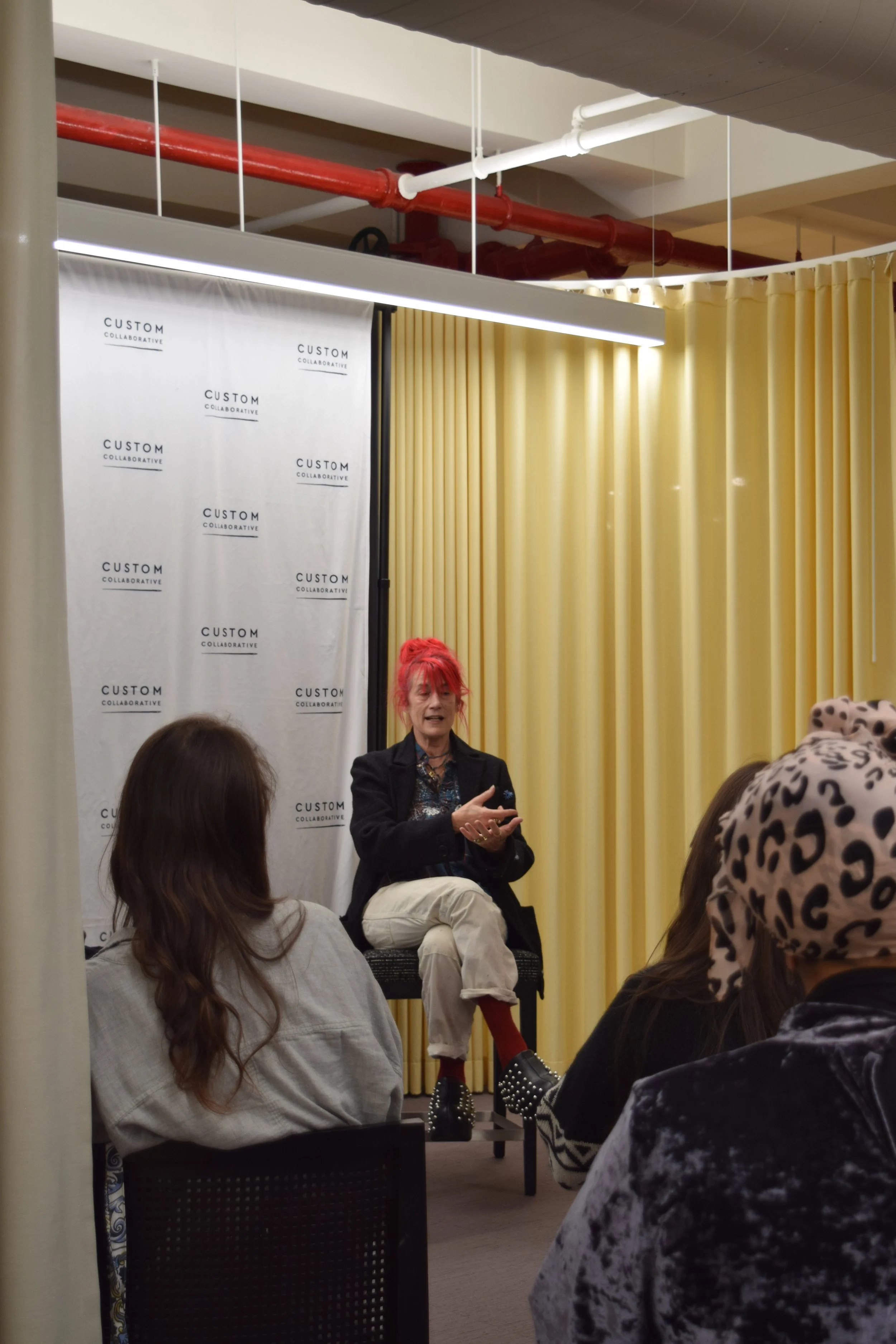
For those who missed our Earth Day event (or just want to soak it up all over again), we’re bringing you the live conversation between CEO Ngozi Okaro and fashion historian Kate Sekules. The two sat down to talk about the state of sustainable fashion, and the result was exactly the kind of honest, thoughtful exchange we love with great questions from the audience.
You can read through the transcript below, or hit play to hear it in their own words.
Ngozi: Yeah, thank you so much, Christie, for that great introduction. Thank you to everybody for being here tonight and…tonight? to Earth Day? to Earth Night?
Kate: Happy birthday.
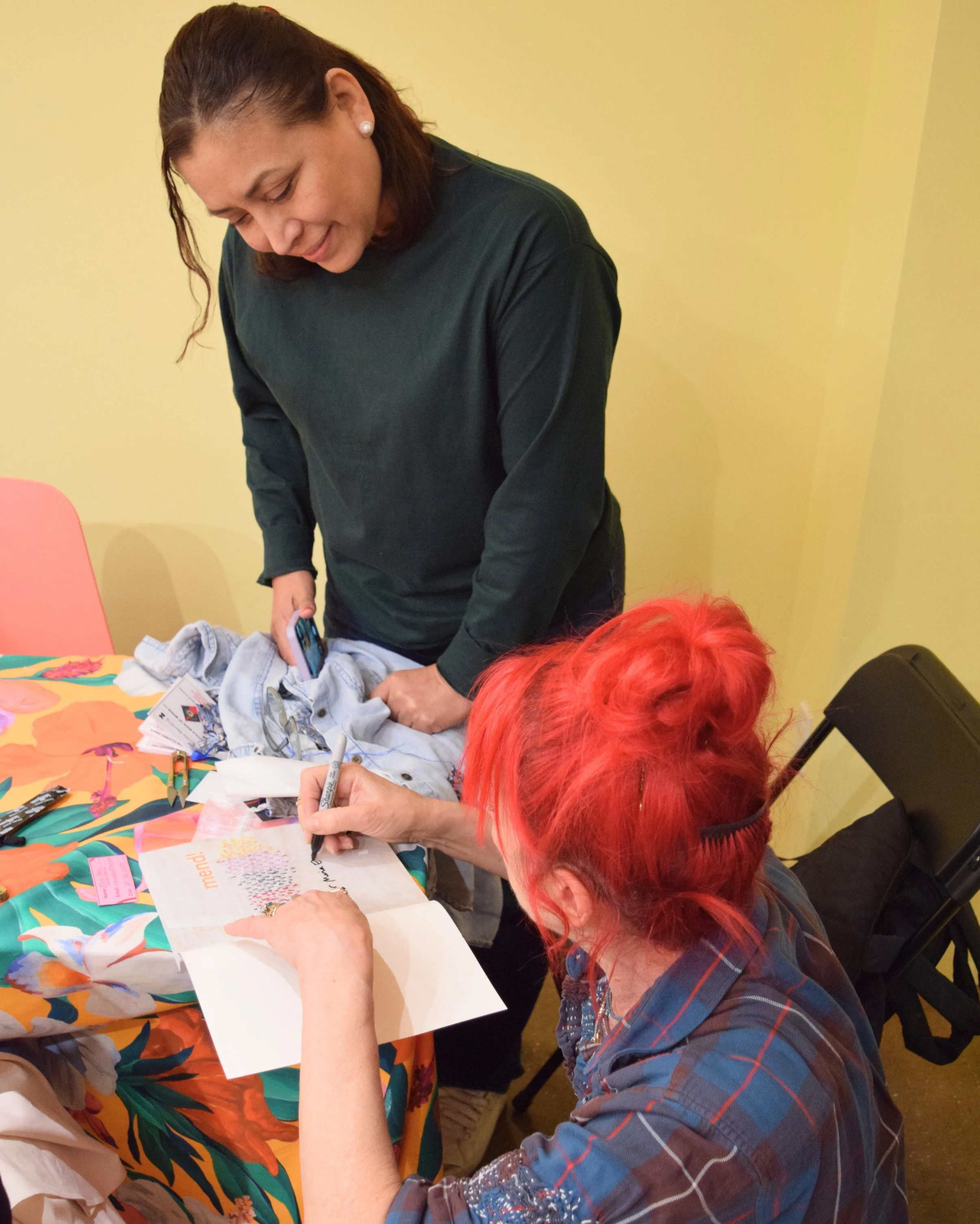
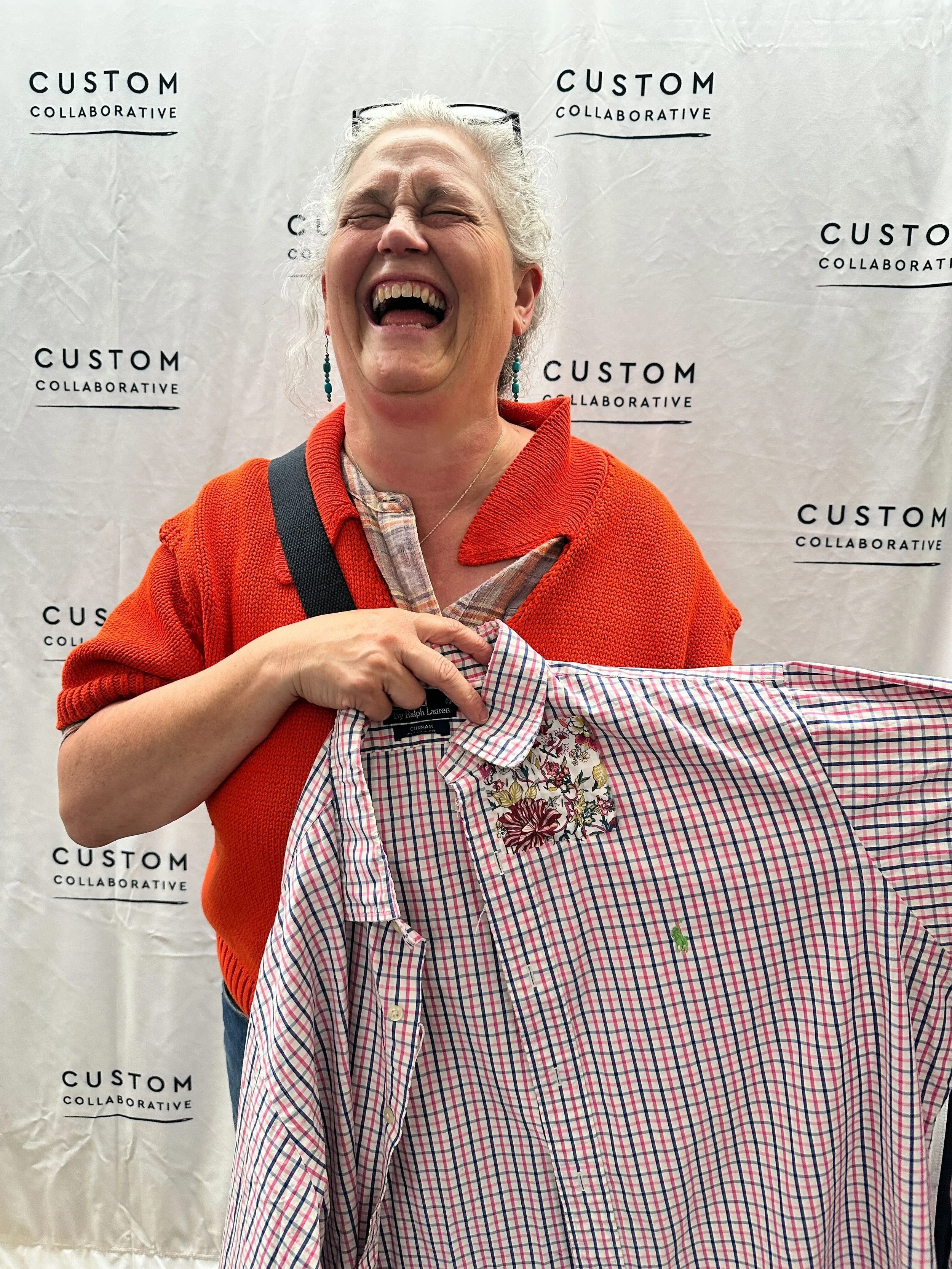
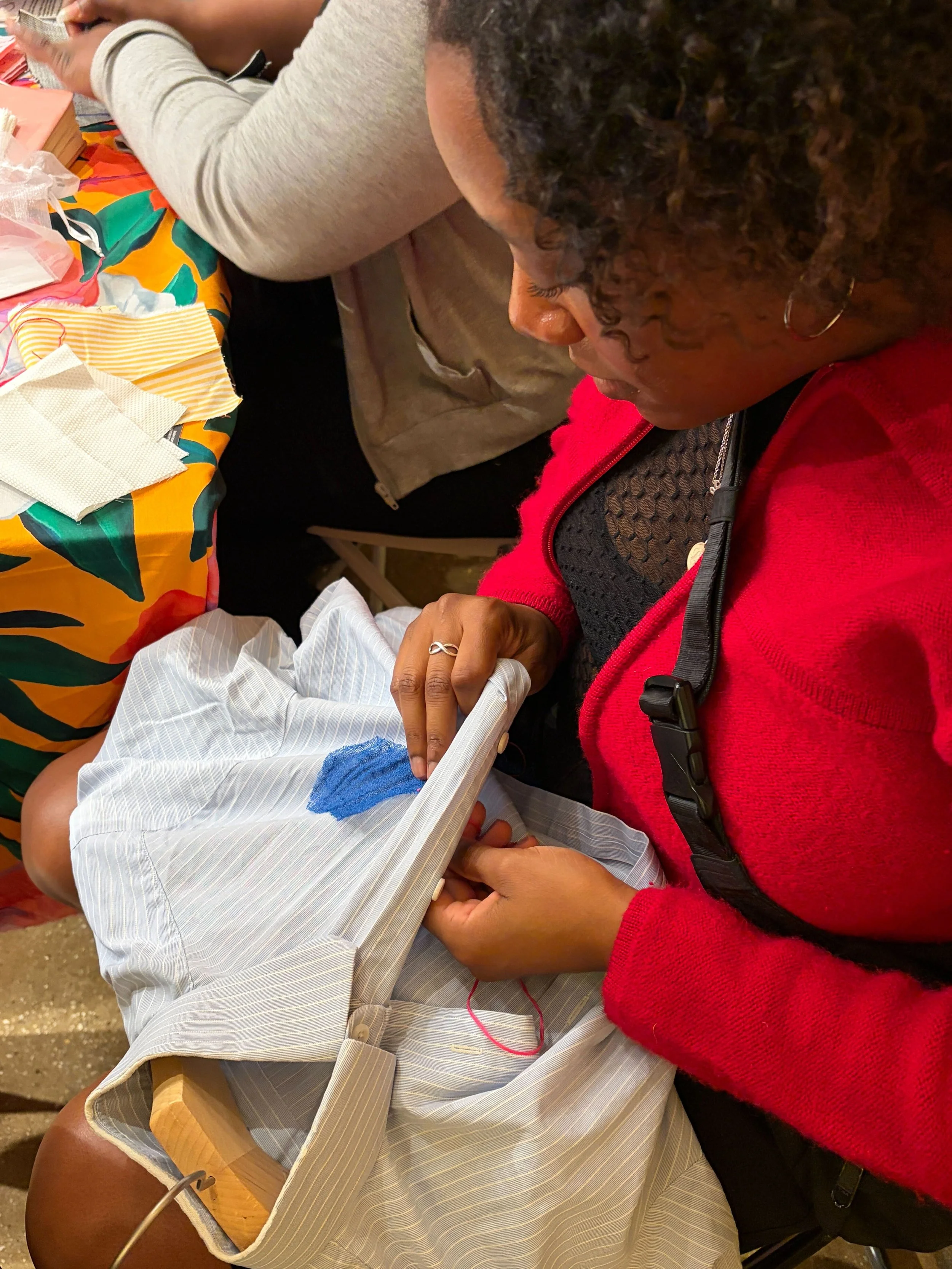
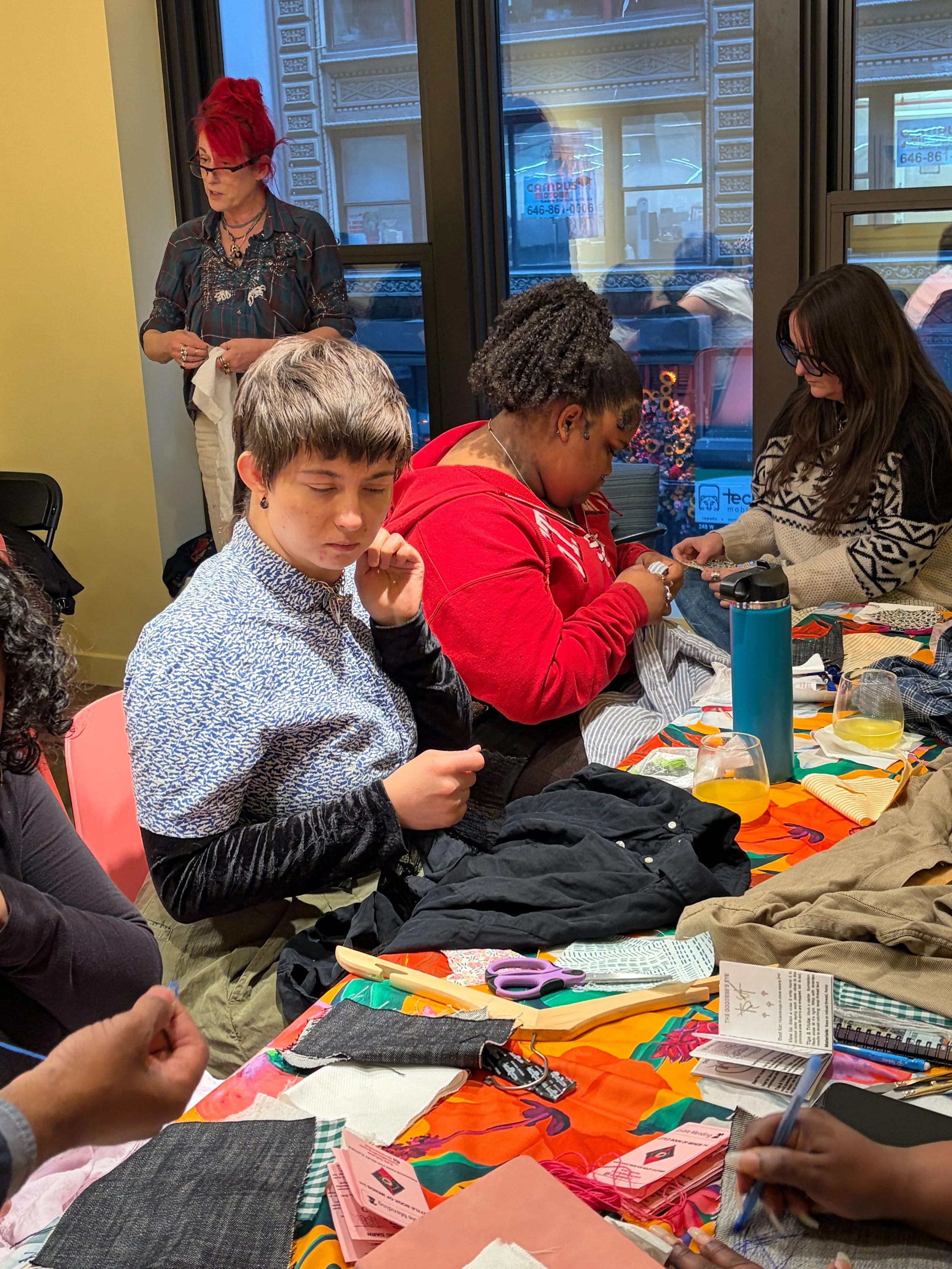
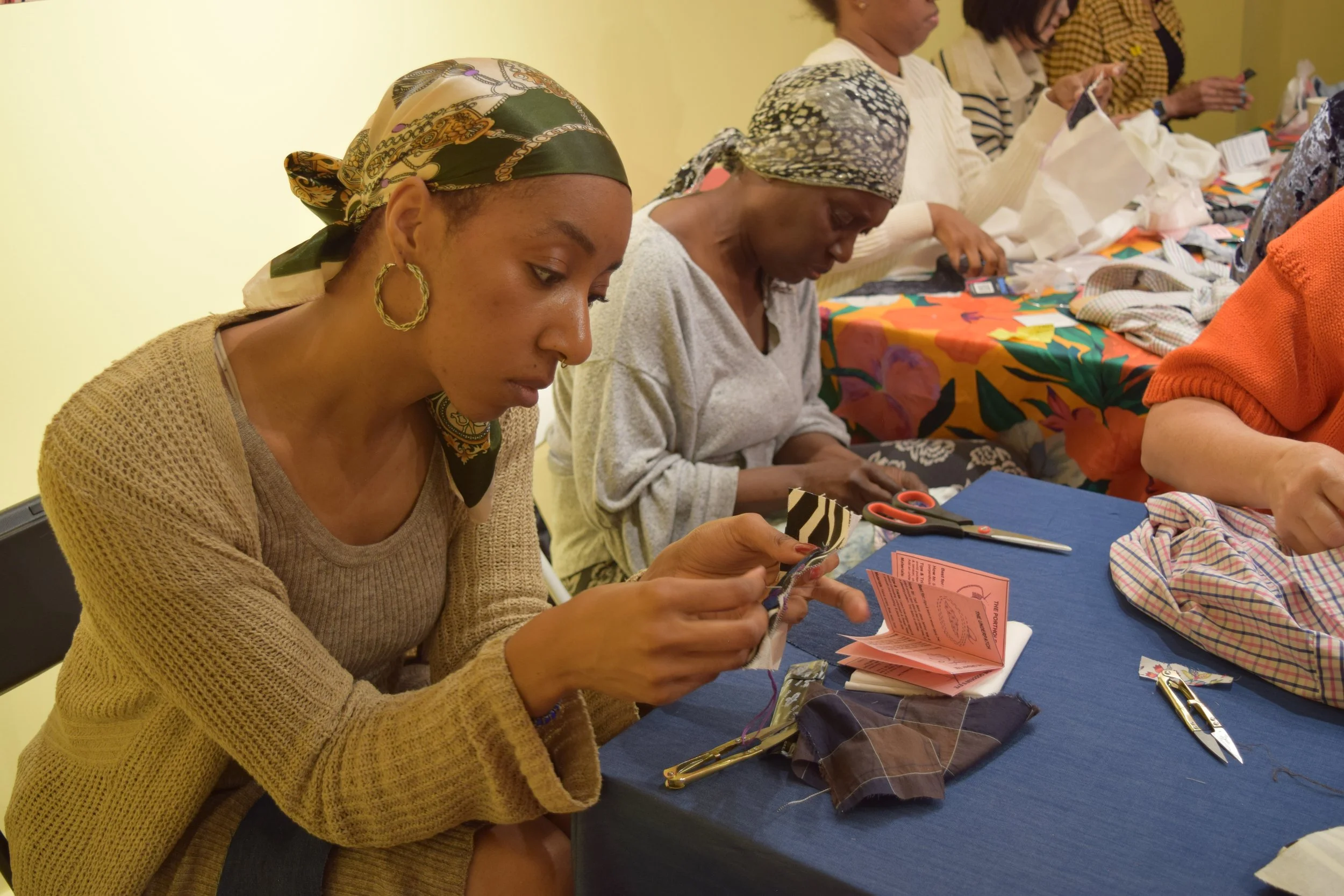
Ngozi: Yeah, yeah, yeah, happy birthday. Happy birthday, Earth. So we just wanted to have a space where we could all participate, learn. Every time I'm able to be in conversation with Kate, I learn a lot. And so we've got a few questions for each other. And there will be space for you to ask questions. And then afterwards, we are going to work on garments. I don't know if people brought things. I brought a T-shirt that I'm going to remake. We have some shirts that were donated by Parron. We've got also different fabric to work on. So it's going to be a fun time.
Kate: Yes. Well, first of all, yeah, hi, everyone. And thank you so much, Ngozi and Christie and Parron, for inviting me. This is like a dream come true. I don't think I deserve it. I'm such a huge fan of Ngozi and everything you've built here at Custom Collaborative. I've been their mending teacher for, I think, it's five years, something like that. I can't count the cohorts I've seen through here.
And at the beginning, when I started, we were just talking about this, mending was kind of niche and a bit odd, and it didn't seem to fit. But can you tell me, first of all, how you started Custom Collaborative? Can you just tell that story briefly? Do you all know? No.
Ngozi: You'll know now. So basically, I was getting clothes made by a tailor in my neighborhood. She's from Guinea. And I would see something in a magazine, and I'd take that picture to her along with some fabric and say, “Oh, make this.” So she would measure me, cut something out, put something together. And the clothes perfectly fit my body, which most clothes don't perfectly fit people's bodies. And I just kept going to her. People would ask me where I got the clothes. I would tell them to get them from Mariama. It was too much of a process.
And so then I just started thinking, how could we possibly formalize this and connect people who wanted clothes that fit and affirmed their bodies with Mariama and people like her who deserve more money for clothes that fit people's bodies and made them look good. And so then that is how it all started.
Kate: The seed. I don't think many people would have gone from that seed to here. Possibly nobody else, actually.
But what you've built here is so inspiring and so, unfortunately, unique. It shouldn't be. So I know this is probably a later question, but how is it going to grow? How are you going to get this further out into the world? Because the women that come through here go out inspired, and we need more of that. And the fashion industry is really in a sorry state.
Ngozi: The fashion industry is in a sorry state. So we're going to save that later question for later to give me time to think of the answer. But I want people who don't know to know about what you do, and even if you can talk about what you've done with the items that you're wearing today. But I'd love for you to give us a pathway into mending how you started on this road.
Kate: Oh, wow. Gosh. I mean, for a start, I've always mended because I'm old, and it was like that. Your mother, or my mother, anyway, and her mother, everyone mended. And in many cultures, that's never gone away at all. But here, it tends to have.
But I grew up in England. Can you hear? And it was so long ago that it started there a something that you just do. And then structurally, it came to me a long time ago…I did a visible mend accidentally, and I suddenly remembered that about 2011 or so. And then I found that this was going on a little bit, a little movement happening in England, not really here at all yet. And it went from there, step by step.
Then I started studying, did my first MA in fashion history, connected it all together, and learned that nobody, and I mean this, nobody has done any history of mending. Now there's a little bit, but even now, there's not very much, not many people doing the history. So my dissertation title is A History and Theory of Mending.
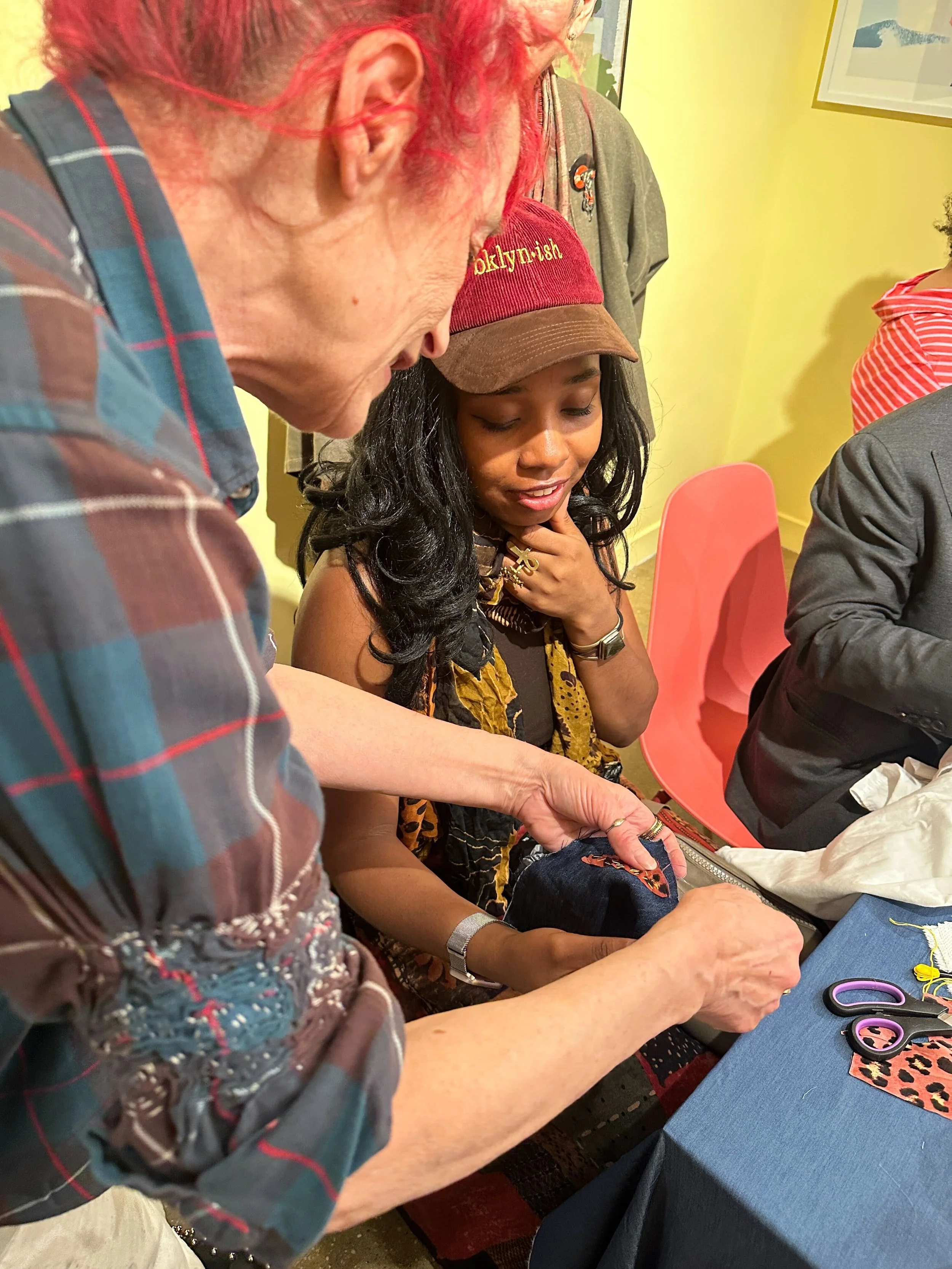
And that's just the academic part. So then there's all the practical stuff, which is equal, and they go together to me. But what's really fun is teaching people to mend. And I feel that, in fact, I know that it's not really teaching that I do. It's just a little bit of demo, and then teaching, and mending teaches you from there.
You just need to start. So I help people get on the bus, which is sort of what you're doing in a very structured way.
Ngozi: Right, right. I think I'm hearing you say it’s differently structured, right? Because you're saying like, oh, here's a little bit of a thing, and now you can figure it out and start doing something, and that's what we do as well. Like, here are some things. You have to know these things, and then you take it, and you move whichever way, but you need to have this foundation, and we can provide that as well as access and networks.
Kate: Exactly. Well, you do a lot more of the access and networks. I will create a more structured mending world.
I mean, I do this and that, for example. I'll tell you a few things later. But how can you start mending? How did I start mending? So you know how I started mending, which is always doing it, but then there's the thing about visible mending, and I am afraid I am one of the people that popularized that term, and as you know very well, Ngozi, and maybe some of you, I don't like that term so much anymore because it's become so trendy, and you think that's all good, but it has a bad side.
You can guess what that is because what happens with trends? People get bored, and we cannot get bored of mending. So what I do in my practice, and I do get bored, so I just keep doing new kinds of mends.
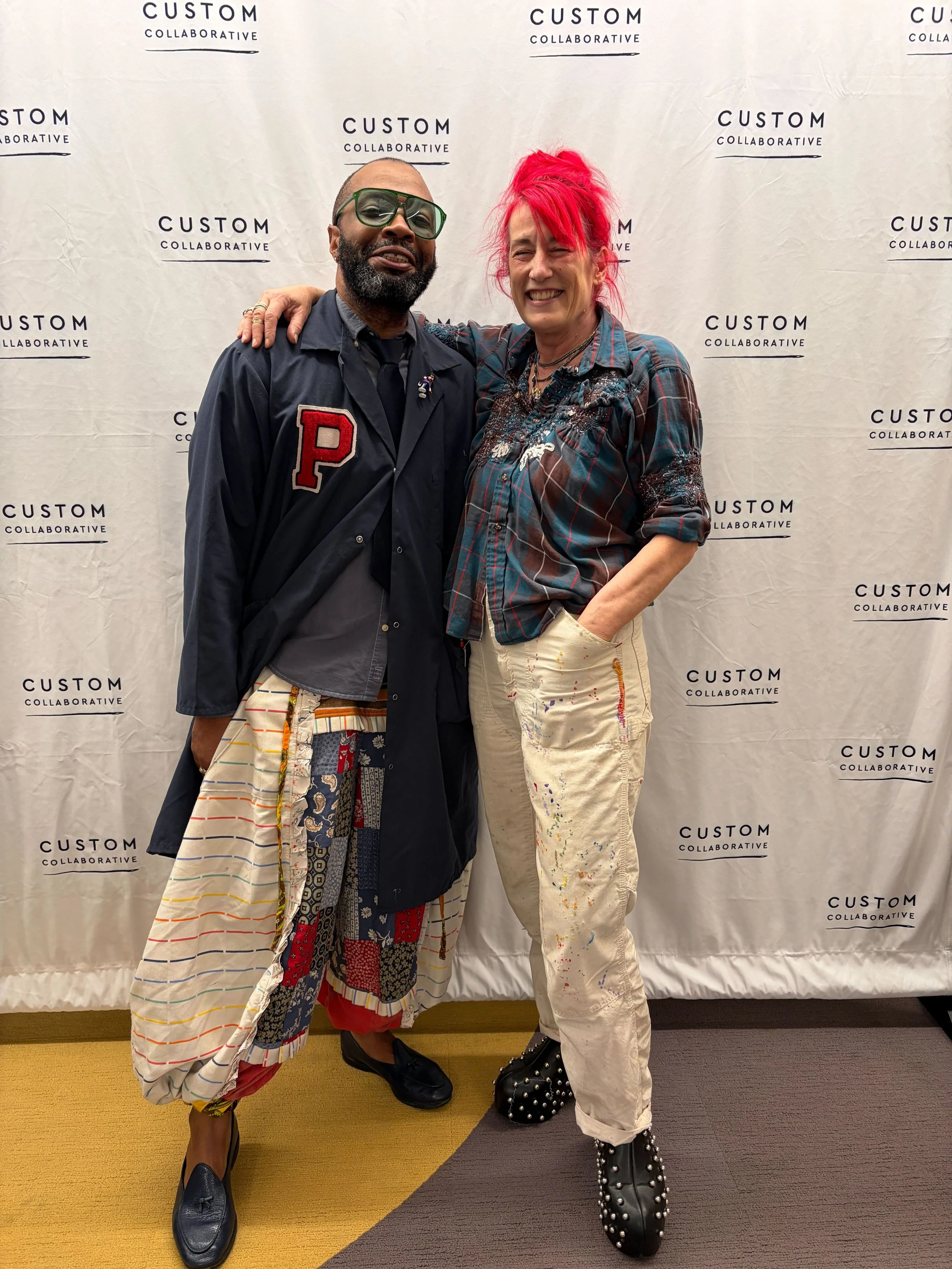
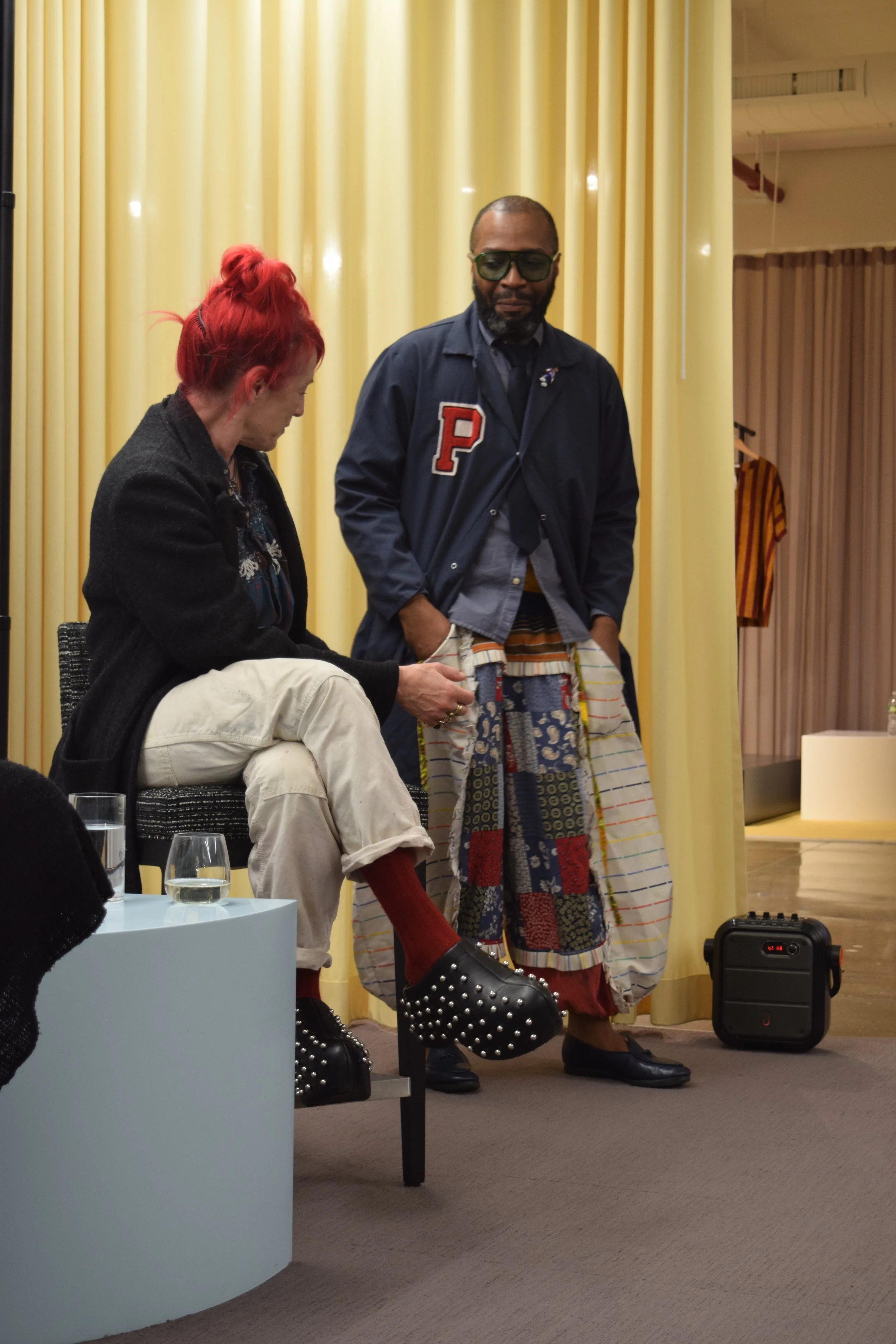
So I'm wearing, right now, I call these the painty pants. It had paint stains, and now I've embroidered all over it, every little tiny stain in different colors. Punk smocking comes out different every time. Husband's shirt, too big, boring, made it funny. This was eaten by moths. This is my teaching shirt, my lucky teaching shirt, so I put these together on purpose. Anyway, moth holes made into unique features.
So I think everyone is capable. I know everyone is capable of doing something really creative when they mend, and not just finding it the drudgery that sometimes in history it has been, because it's inevitable.
And now we have the choice, and that's the luxury. Yeah. I'm so happy you do see mending as part of what you do, but do you see yourself mending the structural fashion industry? How does it work?
Ngozi: Yes, I think part of it is opening eyes to things can be different, right? And so many people, they would have had a blazer with holes in it and thrown it away, right? And you're like, oh, actually, this blazer can be super unique, right?
But we've been in this system where this is how things are done, and this is how we go and take it to Goodwill, and they won't be able to do anything with it. You're like, oh, no, we don't have to do that. We don't even have to go to Goodwill to buy broken things. We can just use the broken things that we have here.
Kate: Which we probably love already because they've been with us. Do you find clothing is more than just a thing?
Ngozi: Yeah.
Kate: What about the cohorts through the years? Have they felt differently after they've finished the program about clothes in general and about their own clothes? Because they've learned to create from nothing, or nowadays they do that graduation garment that's made from old, old garments. What do you call it? Upcycling!
Ngozi: I think so. I think that people do, and maybe someday we'll have answers, but I think that some came to us liking fashion and not knowing how to sew or design or illustrate or whatever. I know that they would say they have a different relationship and understanding because our graduation is that they've got to walk down the runway in a dress or whatever that their classmate made, and their classmate has to wear theirs. So they came from maybe zero to 100, which is a custom garment.
But I think that, and I was just at something yesterday, and somebody asked me, what is your favorite thing in your closet? And my favorite thing in my closet is a dress that was my grandmother's from like the 1940s or 50s, and my grandmother was like a foot shorter than I was, but fortunately, she hemmed it, right? And I found myself thinking yesterday, oh, what if it gets holes because it's like a knit wool? And I was like, well, that'll be okay because I'll do some type of visible mend and add some life to it. And so then she designed and made this thing, and I altered it a bit, but then if I mend it, it's like our thing.
Kate: Exactly, there's a collaboration. I've got this one jumper that I've had since I was 18, and it's this huge black jumper, really good quality, but I'd sort of put it aside for years, and then I found it. My mother had darned it. She died in 2016, and she darned it really poorly, but very invisibly in black because it was the same exact wool, and it was…was just not pleasing to me. So I unpicked all of her darns, which felt a little transgressive, but also good, because they were terrible. And then I found some, she'd done in her life only one needlepoint, and she'd never finished it, so I had the wools, the tapestry wools that she had left from that. So I did every single hole is now made a very obvious tapestry wool, visible darn, and that was in collaboration with her, and I felt really, we did that together. So yeah, what you said, it's really, we can all do that. We don't need much, I mean you teach your cohorts a huge amount. I mean, I can't believe what they get through.
Ngozi: Someone teaches; not me.
Kate: Ah, right. “You,” that's declarative. But you do get them from, as you said, nought to a hundred, and so that's a lot of knowledge. But to do what I do, you don't need much knowledge at all. It's just the willingness, and it's surprising how hard it is for people to intervene in their own clothes, even when they have them.
And actually, when it is something, I did feel funny cutting holes from, you know, taking my mother's darns out. It was a little emotional, and it wasn't only beautiful, it was a little bit, oh I don't know if I should do this, she did that for me, I remember it now. But, it's still, it's yours, she doesn't care. It's fine. I mean, we can do anything we want, even if it's a huge, fancy designer piece; that's another story.
Ngozi: Well, I was just going to say, people don't have to have these heritage pieces, like I have a pair of pants, and either the dry cleaner shrunk them, or my thighs got bigger, it doesn't matter what happened. And so I was like, oh, how do I wear these again, without changing my body? And I decided, I'm going to open up the side seam and put in a tuxedo stripe. Right. And so like, we can do that, we just have to have permission from you now, like, oh, you're a codesigner, right? You can do a thing.
Kate: Yes, co-design. I have all these words, and I keep thinking of new words, and in fact, I want us to, I want to talk about a couple of words, but not these words, these are good words. Co-design is a good word. Visible mending is fine. Mending is a very good word. “Menditation,” that's possibly my favorite. I actually taught a class recently at Pratt, where I teach fashion history, but this was on the side, and it was menditation. A prayer for mending. It was literally that, we did a little service about mending, it was sweet.
But menditation is not a joke, it's really, it really happens. Who's mended, who has mended? Oh, gosh, yes, so you know what I'm talking about. I mean it's something that calms you, it makes you centered, it is a cognitive reset. I say academically that it actually might be a massive cognitive reset that has happened throughout time and space, that it enables you to understand that things are reformable by doing it, by making that happen.
Ngozi: Clothing and people. They're reformable.
Kate: Well, you reform. You restart them. How do you see it? What's the word, how would you put that?
Ngozi: I see it as, we believe in people enough to help them believe in themselves. Like, I think part of it is…we provide some tools that people can take and do whatever direction. And I think that we provide opportunities that wouldn't normally exist. And so I think about somebody who said to me a few years ago, we helped her get a job. And she said, “This is the first ever time I've been paid to work in fashion.” Right, because fashion has a lot of unpaid internships.
Kate: So I want to talk about the, I think, and we did discuss this a little bit. They're not so good words. So, sustainability and circularity. And we both work very much with those concepts. That's what we do in our separate but very connected ways. But why don't we like those words?
Ngozi: Well, I think, and I want to hear what other people think as well…I feel like about three years ago, circularity came out. And that was going to be the replacement word for sustainability. But circularity doesn't encompass all of sustainability. I think one of the reasons that we don't like sustainability is because it has been colonized or commodified. Like every third company is like, "Oh, we're sustainable.” And that's not necessarily the case.
At the same time, people in the general public understand sustainability. So then I'm now thinking, which we didn't talk about, like if we change the word…
Kate: Yes. They'll have to think it over again. They'll have to have a new, fresh outlook. If we have the word, which we haven't yet. They're just selling words now, and they've been completely devalued. So that you can't even hear what's behind them, and I say them. But that's sustainability.
For me, circularity is possibly a bigger lie, because you're supposed to, you know, take, make, reuse. And it keeps going around and around. But the thing is between reuse and take again, you have to break down, reform the fibers that you've melted. Whatever you've done, and most of those processes aren't possible in fabrics, in textiles. But even if they are, they take such a massive amount of fossil fuel that it's meaningless. It's actually worse than that. It could be more damaging to have a massive recycling program for textiles. Most of which you can't recycle. The only thing that they can do well is PET bottles into sweatwear.
Ngozi: Does anybody have a nicer word for sustainability?
Kate: Yeah, we need it.
Ngozi: I see some sustainability people.
Audience member: Is it upcycling?
Ngozi: It's a method of...It's part of sustainability, right?
Audience member #2: I don't think the problem is the words. I think the problem is a unified definition of what they mean. And so I fear if we move to another word, because before sustainability, we were using mindfulness, and the problem is if we can't all agree on what they mean. We're going to keep moving words and words. And we're going to keep shifting how we use them.
Kate: I think if we move words, then we have a chance to shift how we see. It's the word first for me. Because the word can't be heard anymore. Sustainability has just no resonance. What were you going to say?
Audience member #3: I think it's more of what you want to accomplish with it. I’ve worked as a brand ambassador for a few bigger-name companies that try to do sustainable events, but under the umbrella of capitalism, it doesn't make sense for them to say, “Oh, we're doing this whole new sustainable fashion line out of recycled clothing,” but it still depends upon X amount of numbers being sold.
Kate: Well, yeah.
Audience member #3: It's huge upon huge amounts, and Uniqlo does it as well, where they take their deadstock, they embroider it, things that have been returned get embroidered, and then it's a huge, sparkly, three-block sustainable thing.
Kate: It's another selling word. The other thing I think is, what are we sustaining? Because if we say sustainable, you imply that you want it to stay like it is, and this is not what we want. So it's also got at the root of that word a problematic application. When you are sustainable in the current system, it is actually harmful.
So we can argue more about this. But, yeah.
Audience member: I think there's a parallel I want to make. When it comes to individuality, I think there is a feeling of wanting to have something personal, but when you circulate it, everyone has a part in it. But sustainability is good for repurposing and making, for like, you have something custom-made, something that makes you feel special, like everyone's getting some luxury brand or something.
Ngozi (to audience): And you have a word?
Audience member: I don't know that I have a word, but I think the problem with the term sustainability is that it's lost all meaning without being part of transparency to a supply chain and understanding where it has come from, from the farming to the showroom floor.
Kate: Yeah, well, we can't solve that immediately, but we will.
Ngozi: Let's move to radical.
Kate: Let's move to radical, yes. Do you see what you do is radical?
Ngozi: No, I was supposed to ask you why you think that mending is radical. So, trick question. Yeah, but tell me when you talk about mending as being radical.
Kate: Radical, yeah. I mean, it's radical in many ways, but mostly it undermines what we're supposed to do these days, which is consume more. I mean, it's so clear and obvious to me that I almost never say it anymore, but I think it does bear saying out loud over and over again because it is a radical act.
As soon as you intervene in something that is supposed to be at the end of its life and renew it, you have made a step, you've made an inroad in…scale that, I'd say, scale that! And they would love to because I've been approached, but it is not applicable by a major brand. No brand can do mending. Mending is, even if you're doing it by machine, you're doing it by hand.
And by the way, machine-made clothes don't exist. The factories, they're not made by factories. They're made by humans working machines. This is something that's so fundamentally part of what you're teaching. I bet that isn't always understood, even by those who are forced to work that way in places where those huge factories are.
We don't value that kind of labor. So it's radical as well because it's a valuation of the labor mode that has been disregarded in history, not noticed at all, and also unvalued, disvalued, unseen, and disliked because it correlates with poverty and need. It's gendered. And actually some of these things, I'm finding, aren't always as obvious as you think, which is nice. Like the gendering thing, for example, but that's a big story.
Yeah, it'll be a book eventually, that whole thing…Yeah, so radical, radical, radical. It's good. You can't replace sustainable with radical, can you? No, not just yet.
Audience member: Maybe, excuse me, extendability.
Kate: Extendability.
Audience member: Yeah, just because the way I see it is that when I have a piece that I absolutely adore, and I see it has a rip in the arm or something like that, or it's stretched out, my mindset is to extend the life of that piece so I can wear it for longer or my little sister can have it. So I think that maybe that's the way that we can kind of look at it, like taking things that we've already had and extending the life of them, whether that means dyeing it or just doing a small mend here and there.
Kate: Extendable is good, yeah.
I was looking at the notes that we've got. I didn't want to forget to ask anything. I've done something I really want to ask you and talk about, bringing to the space, is just to remind us that we're in this privileged area of the world. That is, never mind what's going wrong, but what we do have is choices, and there are so many countries where it's just never been, and cultures where mending has never not happened. Or dressmaking.
And what do you hear from women that come in who haven't lived here long? Because you get a lot of new immigrants, don't you? Or some anyway. What are you hearing from them about their attitude in general?
Ngozi: I think it's encapsulated by something that Jasminea said to me, I think in 2019. She said, "Oh, I never heard of the word sustainability before I came to the US and before Custom Collaborative told me what it was. But at home, this is how we do everything,” Right? And so she's from Angola. She’s like, of course, we remake our clothes and mend our clothes and use this scrap of fabric with this other scrap to put a dress together. And we're not throwing things away.
And so it just dawned on me, like, oh, we have a name for something because it's abnormal to us, but it's actually normal. This is the standard for the rest of the world.
Kate: And I find, especially anyone who you ever meet from the Indian subcontinent who was born there and raised there, or just even has family there, they just can't believe how backward we are. We're just so tragically deprived. I think it's that way around. They have these deep traditions that are still going, including a lot of mending. Anyone from India? Global South.
Ngozi: Global majority. Anybody here from a global majority country?
Kate: Oh, we don't know what we're supposed to say. But when I think about it, I love this idea of flipping the Earth because when you think about it, South and North are meaningless because we're situated in space, which has no direction. So, why did we ever decide that? And then how did we, “we on the top,” get to be the ones who run…
Ngozi: I don't know. I feel like you were taking us down a road, and I identify with the dirty South.
Kate: Wherever I'm actually from, 'm definitely on the mend side.
Ngozi: Yeah, it's interesting because I think our brains have been directed a certain way, right? And it's like, who is capable of design?
Kate: Exactly, yes, it belongs to an elite few who've had training from a professional body somehow. And then they have the ability to make money for someone else, usually. But it always boils down to that, doesn't it?
Ngozi: You commodify it. African masks were always a thing, and then Picasso said, "oh, look at this. Let me put it in this style.” So then, African masks were a different thing.
Kate: Good point.
Ngozi: Rounded boots were a thing. Always, right? And then whenever they started wearing bustles, then it became a thing. And so did you invent something? Or did you want something that somebody else had and the try to figure out a way to sell it?
Kate: I'm talking about in the mending world in particular, you might have seen the #SashikoMending, and you might know what Sashiko is. These are not the same. And that one really annoys me because it's very mending-oriented, and there's a lot of appropriation of this very ancient craft from the rural north. Well, Sashko is a bit far from the rural north. There's a whole situation behind that, a whole history. And it's never brought or rarely brought together.
So yes, all sorts of ways to appropriate other people's creativity, and especially in fashion. But on the other hand…I think that fashion can change the world. I mean, literally change the world because it's so huge. What everyone does, apart from me, and the other end, is get dressed. That's a lot of possibility there that can be switched around.
So I just see what you're doing as a massive possibility. And I wondered about, did I ask this earlier, and you said we could come back to it, or did I not say it yet? How do you scale Custom Collaborative and the likes of something like that? How do you then take that out and scale it? Because you always have to, don't you?
Audience member: You don't have to.
Kate: Well, you don't have to. No, actually, I completely take that back. Iteration is what I think of. Thank you for that. Iteration, you don't scale, you iterate. More and more and more and more. Tiny, tiny, tiny, tiny.
Ngozi: And so I think that iterating is what we're always doing. We're going through a process right now, in terms of our staff, and I know the board is working on some similar things: What are our goals? Where do we see ourselves? What are the things that we need to do to get there? How do we know when we've gotten there? So we're always trying to make things a little better or a little more responsive, right?
Because, as a nonprofit social enterprise, our audience is the community. Those are the people who tell us what we need to do. And right now, what we're hearing is, yes, in some ways, we do need to scale. So that means that there are people who want to be in our programs, people who are qualified to be, who cannot be, right? And so then, how do we meet that need? I think also there's growth. Right now, we teach, our Training Institute at least, only in English, but there are people who speak languages other than English. We would need to be able to grow to meet that need.
And so in scaling, we could do any number of ways. We could license our curriculum. So there are lots of things to do. And so then that's why we're regularly in conversation with ourselves. Is this necessary?
Kate: Because you have limited resources. As a nonprofit, especially. You have to be careful where you put the energy.
Ngozi:That's right, that's right. So I feel like we probably have 99 other questions, but I want you all to be able to get your questions answered before we go to mend.
So, does anybody have any questions that we have not yet answered?
Audience member: You touched on something that I think really is a part of it for me, which is that it's connected to poverty, which is something that we want nothing to do with. So it sort of gives it this, like, don't touch, leporsy kind of thing. And I grew up in the Midwest, where you mended, and you promoted those values until you had the money that you didn't have to do that.
Kate: That is so fundamental because I mean for starters, there's been a total fracturing of that connection because what we're doing is we're in a problematic situation where we have over use,, we have too much. I don’t think anyone can deny that. So before, when mending was associated with poverty. And by the way, it has always been. There's my news from the history front.
Audience member: I remember reading somewhere that every time Prince Charles had a suit, that they put some of the fabric aside for him to mend his suit for decades.
Kate: He is one who has never stopped that. She is a kind of aristocratic English thing altogether. It can be.
So it's not always associated with poverty, but when you have come from that kind of lack, and you remember it, but there's this, I don't know how long that memory lasts if it's…skipped a generation. So I've looked back through a few rounds of this, and that keeps happening. It has happened before, exactly what’s happening now. It comes back around. So…stocking darning. I've just handed in my Chapter 3, which is about 19th-century stocking darning, and it fell out of use. It was despised. No one wanted to do. So they made, you know, stockings much cheaper, and you just throw them away.
What’s happening with us now happened to them in the end of the 19th century. So it became a pedagogical force and it became trendy. There were darning parties. I mean, all of this history is not known. So I think it would help, perhaps to know that it isn't always one direction, unidirectional. It isn’t always that we're trying to get out of poverty, and therefore, we mustn't mend anymore because it means that you look like you're ragged. I think that's not been the case for some time. And when I started here, I was really concerned about that cause I didn't want to go and kind of impose this kind of elitist look. But it was never for a moment a problem. Only one from any of those cohorts has ever said, “Oh no, I don't like this. It reminds me of growing up when we had to mend.” Only one, and I respect that hugely.
And then there is the whole thing which is also really valid, if you're out there, and you don't want to attract attention to yourself, if you don't want to appear poverty-stricken, then you have to look pristine, and that's really real, but I think Balenciaga alone has the end to that. I mean, have you seen them?
Oh, yeah, there is, well, there's plenty of that now it's become, and I predicted this, and I'm both horrified and delighted that I was right. Because once it's trendy to look like you're from…the streets? Can I say that? Like you've got nothing. Once you can look like that, and in fact, it costs you $7,000, then I think we've changed the conversation.
Audience member: So you talk about fads, trends shift, right? How do you see the opportunity to turn mending, you talk about the physical mending trend. How do you turn it into a shift?
Kate: You mean keep it going past the moment when the trend has gone? Good lord, yeah, that's where I got the co-design thought from, because I mean, it's not used just in this context. It's a thing, but…You just have to keep adding new ways to mend, and what does mending mean? It actually just means it's embellishing. You can restructure; it also intersects without upcycling, as you were saying. And what you do here when your cohorts make their second piece that they do now. They've mended something from what would have been discard, which is overstock, and then they, well, that's it for many.
Certainly, just keep pushing the meaning. I keep talking about words and meanings, but I think they're really important to get ideas across. You can't avoid it. So, also the look just, I mean, it's so hard to be heard in there cause you gotta do the social media thing. Do you do?
Ngozi: Somebody does social media. They do it very well. Yeah, my job is to ask people for follow-ups. @customcolab. One L.
Kate: I mean, I'm a really little bit off Instagram, @visiblemend. There's things coming up that you might like to announce. So…
Ngozi: I want you to announce something, because I’m super excited about this. And then if there are other questions, we can do those.
Kate: Okay, well, we just signed a contract officially. It’s something I've wanted to do for the longest time.
First of all, I have a monthly mending club, which you're all invited to. It's at the Textile Arts Centre in Brooklyn. And I have two co-hosts, Martina Cox, who's an artist, and Hekima Hepa, who's the founder of Black Girls Sew.
So Hekima and I together, and this is something I've wanted to do forever, but now we’ve joined forces. We're doing the world's biggest mend-a-thon …on a boat! It's a yacht going around Manhattan, you know, those ones. It's not that circle one, it's a fancy one. We've got, you know, food and drinks, we've got guests. We've been planning a lot of stuff. We're gonna have programs. I hope Ngozi will bring her crew to do whatever you decide is what you wanna do on a boat. Anyway, room for 400 and no more. So that will be announced soon. We will have some tickets available! It's gonna be amazing.
I’m trying to get Guinness World Records to do it just to break the record. There isn’t a record, so make the record and then break it.
Christie: We have time for two more questions.
Audience member: Say that I want to open up a fashion line. I want to start this business. But, you know, I'm torn between, how we have to create things, like, you know, using all the raw materials and all that, then the cycle goes on and on and on. But I want to create something that is already used. How do I go about that? What are the sources? And because there's a line between a sustainable practice business or sustainable products…But yeah, because again I've been thinking how I really like to do fashion, but again, man, I love the environment, too. So I was like, what do I gotta do?
Ngozi: You’re a creative?
Audience member: Yeah
Ngozi: So I think that the most important part to think about first, and I think Nancy might have an idea, is the business, right? Because there are so many people who have creativity and great ideas and can make a great line and can't sell it for an amount that makes money, right? And so just think about, in terms of that, you want to have a business, you want it to be sustainable, ethical, whatever it is. How is it that it makes money? Nancy?
Audience member [Nancy]: The first thing you have to know is who's gonna buy it. You figure out who’s gonna buy it, you can reverse engineer what you're gonna make. You can go to FabScrap here, great materials, then you work with them for a few hours, and you get amazing opportunities. The resources are there, just building the business case.
Kate: At Pratt, I teach fashion history, and it's a compulsory course for the fashion design students. So I get all of them. And that's been very interesting, but they have that worry. A lot of them have that worry, increasingly. And they didn't necessarily. I started teaching that course, the way of teaching it, um, six years ago, and they've really changed. They're really concerned now. And that's, I think, that's progress.
But what I always say, and Parron is around, he’s actually modeling something that our friend Janelle made, JRAT. She makes this zero-waste. And I've been saying this for years, only use existing clothes. It's impossible to scale, but it isn't.
I mean, I just want to steal it. But you know, my friends who are devoted to her way of doing, it's very much her vision. But everyone can make clothes out of the mountains, the unbelievable oceans full, of old and new clothes. New world clothes. Deadstock, discarded.
And Janelle is really funny and brilliant about it. If she takes one garment, she has to use every scrap down to the label. She's not allowed to leave any bits. Yeah, that's her overall response.
Audience member: Thank you. Thank you so much.
Christie: Final question.
Audience member: I have a specific question when it comes to mending materials that aren't that easy to work with. Specifically like leather, faux leather, or vinyl. Just because I have found myself like in spaces where I found something really great and vinyl for like the eighties, but there's like a hole in the seam and I'm like, where do I even begin? So I just wonder.
Kate: That's tough. Yeah. So PVC, vinyl is a fabric that has what’s called inherent vice, which means it will break itself down. It's chemically unstable.
And if you've ever had a piece of, you know, 60s, one of those wet look coats or something, if you store it in plastic, the plastic will stick to it, and that's because it's off-gassing, and it's actually changing its chemical structure. You cannot do anything about that. But if it's just a hole, you can patch that. You could try. But I think that's one of the only things. I never say you can't mend anything, but that is just one of the few problematic. And you'll hear this from everyone, from Museum Conservation Science, that's where it comes from. All the knowledge is about that. They know from bitter experience that it isn’t a good future.
Ngozi: I guess it depends on how cute you’re not trying to be, because electrical tape, which comes in different colors.
Kate: Oh yeah, that's great. Or the Gaffer tape. Just stick it. That's it, Gaffer tape and different colors.
Ngozi: So, I just want to transition us to our hands-on portion. I brought a garment, if you didn't, that's fine. I'm just gonna tell you guys what I'm gonna do with mine. So Sanford and Sons is one of my favorite shows. And somebody gave me this T-shirt before, “You big dummy,” cause Fred Sanford says it a lot, and so I didn't like the shape of it that much. And so I, like, kind of like, gathered it up on the sides.
Kate: Genius idea for shortening your T-shirts
Ngozi: Right, you could, yeah. And then I cut a little bit of an opening here. And I'm gonna take this off, like, this ribbing off, and I think do a stitch around the opening.
Kate: I've done loads of those. I should have known.
Ngozi: No, I just made it up in my head today. So, like, you can be my private instructor. So this, I think, is going to end up being one of my favorite shirts, even though I've never worn it before, but it's gonna be.
And so if you all have things, if you don't have things, we have it all for you.
Kate: What we do at Darnit, the club’s called, and, actually @darnit.club is the Instagram that you can follow. Suppose we don't do much on it, but anyways. Darnit Club, first Sunday every month. We always do the same, I invented, actually. And I do it in all my classes everywhere. And it is this really great thing where you hold up the thing you brought, and it’s show us your hole. It’s funny, hilarious, right? But we won't have time to do that tonight. Okay, we can't there’s too many of you. We’ve got to get to the mending.
Ngozi: Thank you so much for joining us, Kate.
Kate: I mean, I don’t even know where to begin. Thank you for everything you do and for having me.
Moments From the Mend!