
Modeling Change: Jazzmine Carthon on Weaving Equity into Fashion
Custom Collaborative partnered with UPROSE for the second time on their Slow Fashion Day at the Climate Justice Lives Here! Festival, supporting designers with fabric donations. Held during Climate Week NYC, the event spotlighted frontline makers and sustainable designers on and off the runway — including Training Institute alum Rosa (Cohort 12).
To celebrate this collaboration, our Alumni Coordinator, Stephanie (Cohort 10), sat down for an interview with model, content creator, and community organizer Jazzmine “Jazz” Carthon, who helped produce the event and has built a career centered on equity, sustainability, and self-acceptance.
Originally from Compton, California, Jazzmine was the first curve model to win Project Runway and has spent the past eight years in New York redefining what it means to show up authentically in an industry that often resists it.
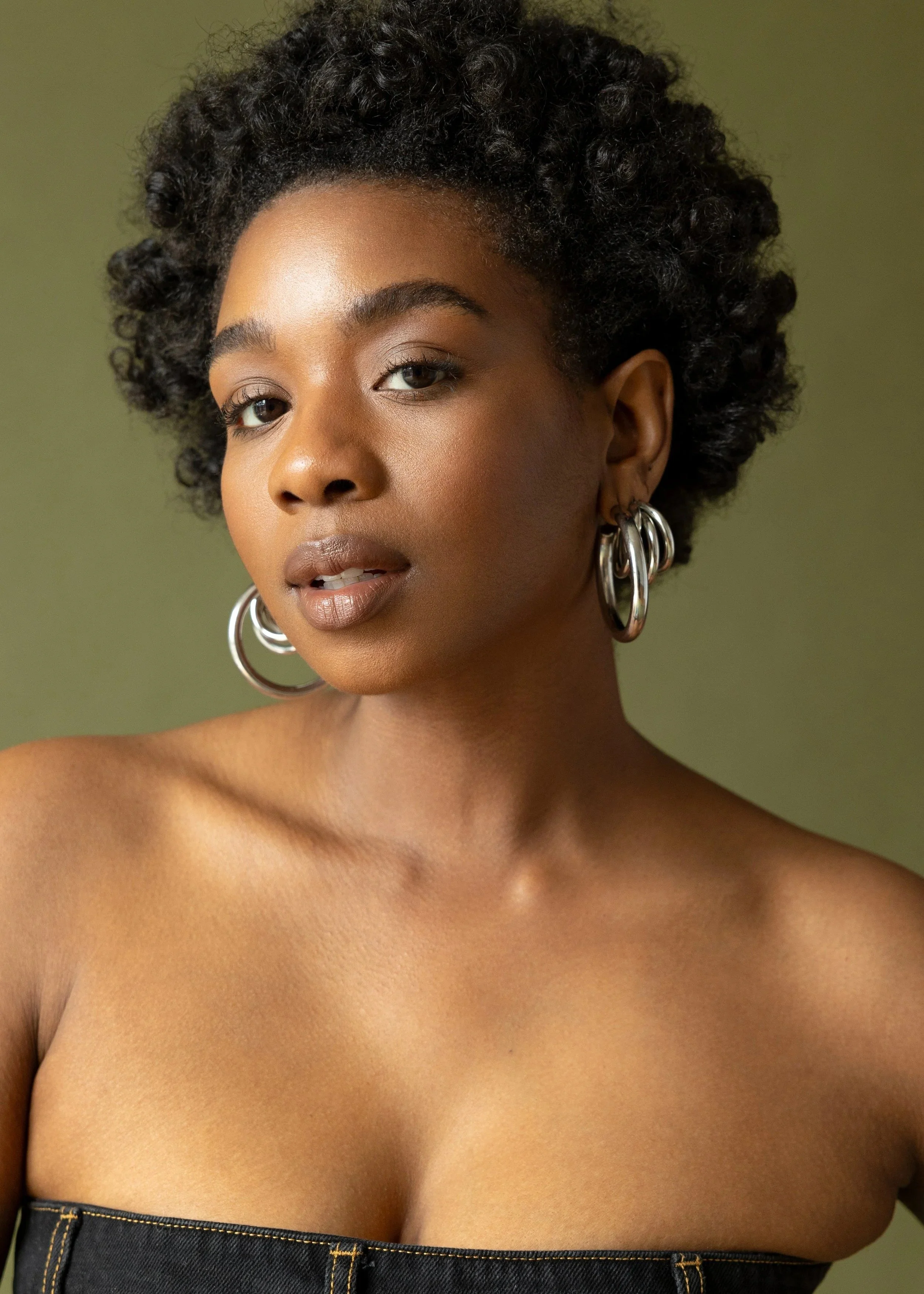
Finding Power in Authenticity
Stephanie: How did you get started in fashion and modeling?
“The constant in my career has always been advocacy, because I know what it's like to be in a marginalized body in the fashion industry. So, being everything from plus-size to Black to someone with textured hair, I know what it's like to be tokenized.”
Jazzmine: When I first started to model, I was trying to get really skinny, doing all of the fad diets, working out twice a day, taking diet pills, doing a lot of harmful things to fit myself into this box that I thought I needed to be in to become a model. And then eventually I just kind of was like, I don't want to do this to myself anymore.
I let my body grow into the womanly figure that it did, and all the opportunities just kind of fell in my lap. I started going to castings and, at a size 16, was booking them.
A good friend of mine sent me a casting for Good American before they launched. That kind of pushed me and made me more visible.
From Modeling to Movement-Building
Stephanie: How long have you been involved in community organizing?
Jazzmine: When I first started modeling, my best friend, Velonika Pome’e (another panelist at the UPROSE show!), was already organizing. We did this event together called Growing Up Plus, where we talked about what it was like growing up as a young child in a plus-size body and in a marginalized body.
Then we both moved to New York, and continued noticing the different ways the industry needs to be improved.
So fast forward to 2020, when George Floyd was murdered.
“Sometimes the only thing you have the capacity for is to hold hands with your friend or your comrade or your partner and pray or sit in silence or cry. That is community building, too.”
During that time, myself and a few others, got over 200 models together on a Zoom call to talk about how we can change the industry. We came up with an organization called Models for Change Now, which was focused on the treatment of Black and Brown models and creatives, both in front of and behind the camera.
Through that, we held events where we brought together a bunch of Black models who otherwise only see each other at castings, because it's rare that we're cast together.
That work lit a fire under me to think, “Oh, I can do more." And in doing more, it doesn't mean that I have to do everything.
When Fashion Meets Purpose
Stephanie: When did you first encounter Custom Collaborative?
“That confidence in learning something new that Custom Collaborative gives people is such a beautiful thing.”
Jazzmine: So, my first encounter with Custom Collab was because I was cast for the Vogue Business shoot, and I was able to wear a really cool design by Patricia (Cohort 9). It was just really rewarding to come in and see an organization that is about giving the community tools and resources to sustain ourselves.
It was just a beautiful thing to be on set and to have professional models wear these designs and wear them proudly. And because we were proud, like, and still am, I'm so proud of that shoot because it was something that I did that made me feel good to my core. Like, I love everything that Custom Collab is doing.
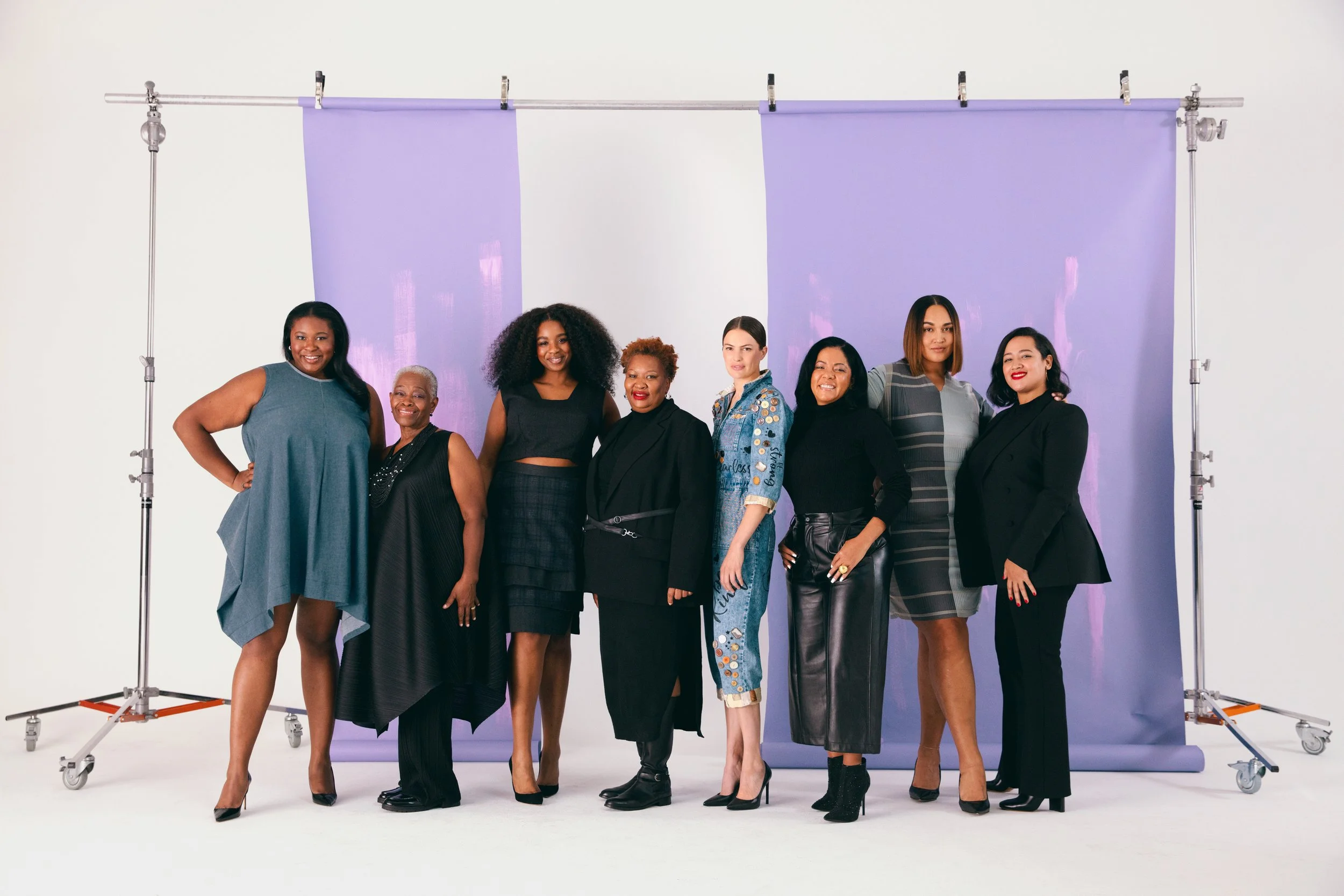
Fashion and Climate Justice
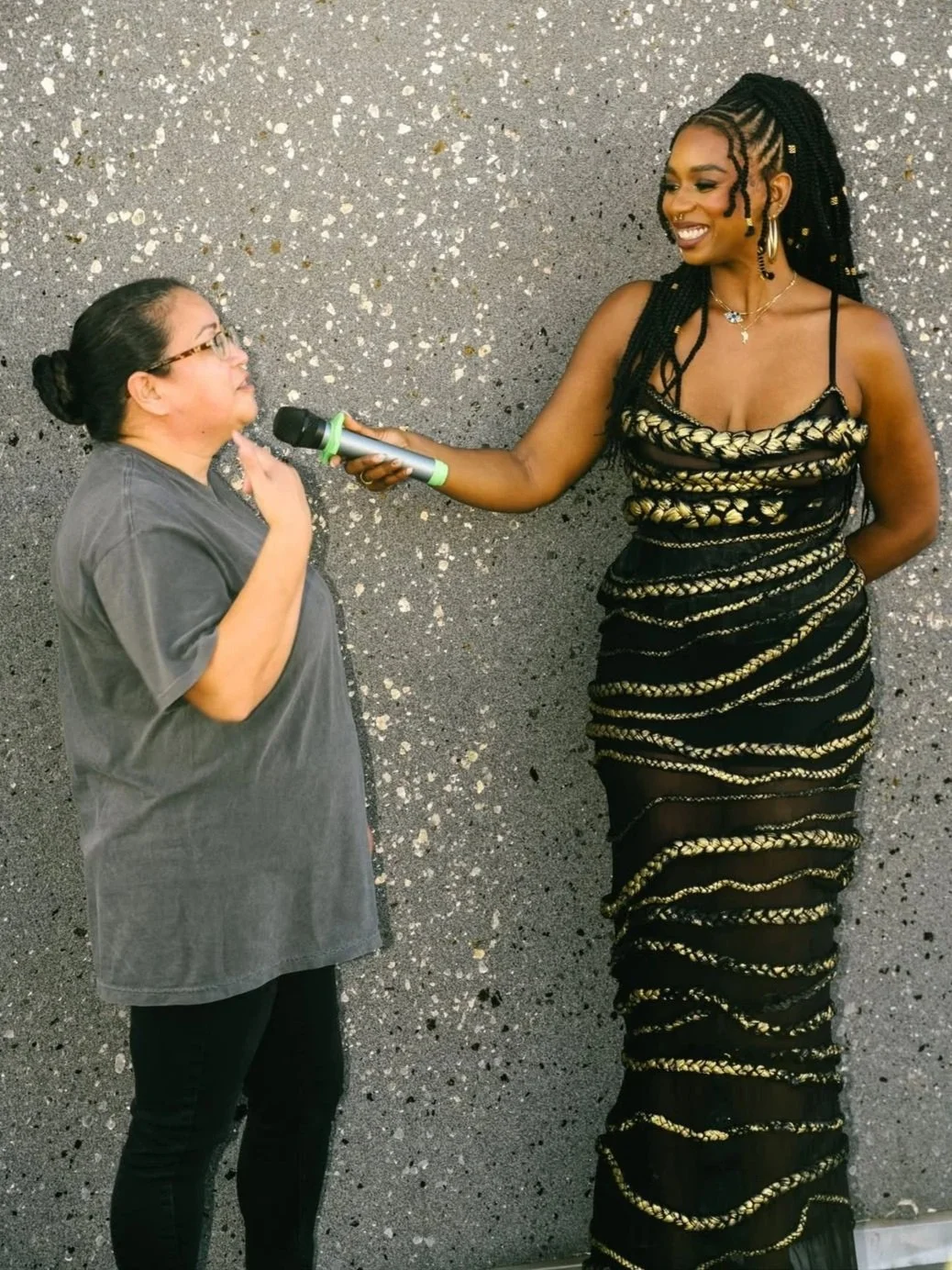
Jazzmine interviews Rosa at the UPROSE Slow Fashion Day show. Photo credit: Baba Khid
Stephanie: What led you to lead the UPROSE Slow Fashion Day?
Jazzmine: So last year, UPROSE reached out to me to host their panel on sustainability and fashion. And we got into a really good conversation on accessibility to sustainable fashion, especially when it comes to marginalized bodies. Between myself and their team, we put together a group of panelists who navigated a really strong conversation.
This year, UPROSE reached out asking me to not only host a panel, but host the whole Slow Fashion Day at the Climate Justice Lives Here! Festival.
So, between UPROSE, their team, and us just blending our ideas together, we brought to Sunset Park, Brooklyn, a sustainable fashion show, two panel discussions — one on accessibility to sustainable fashion, and the other on the global impacts of sustainability in fashion — a clothing swap, a mending station, and more fun things. We wanted to bring the conversations on climate justice to the people who are affected by it most.
Style That Sustains
Stephanie: In your eyes, what role can fashion play in advancing conversations about justice, equity, and community?
“So you can't go and spend money on the super organic material that’s best for you. But there's something else that you can do to help the environment. You can rework what you have. You can recycle…It's about utilizing what we have for the greater good of the world.”
Jazzmine: You know, I think it's important for us to bring Black and Brown people, not just as the face, not just cast as models and as talent, but to bring us in and hear what we have to say and empower our initiatives.
Like, I don't want you to just bring a Black person on your team so they can execute your ideas. Listen to what we have to say. We are literally a voice of the community, and the community that you want to buy your stuff, right? So listen to us and execute what we need to move our community forward.
Essentially, I think what I want is some accountability. You guys say that you care. Cool. Be like Custom Collab and bring design and resources into the community.
Building Community Through Fashion
Stephanie: What keeps you excited to continue this work?
Jazzmine: What keeps me excited to continue in the fashion industry is seeing that I'm not the only one who cares. That so many of us are, and of course, maybe it depends on your algorithm, but so many of us are seeing the injustices that are happening, not just in the fashion industry, but in the world in general, and want to do something to change it and to evolve it. To take what we've learned and unlearn it, and take what society has told us is acceptable.
Community is everything. Like, honestly, what is the saying? If you want to go fast, go by yourself. But if you want to go far, bring your homies with you.
Follow @jazzminecarthon to keep up with her modeling and advocacy work, and be sure to check out Principle Thing, a mother agency where Jazzmine works as the Director of Community and Advocacy.